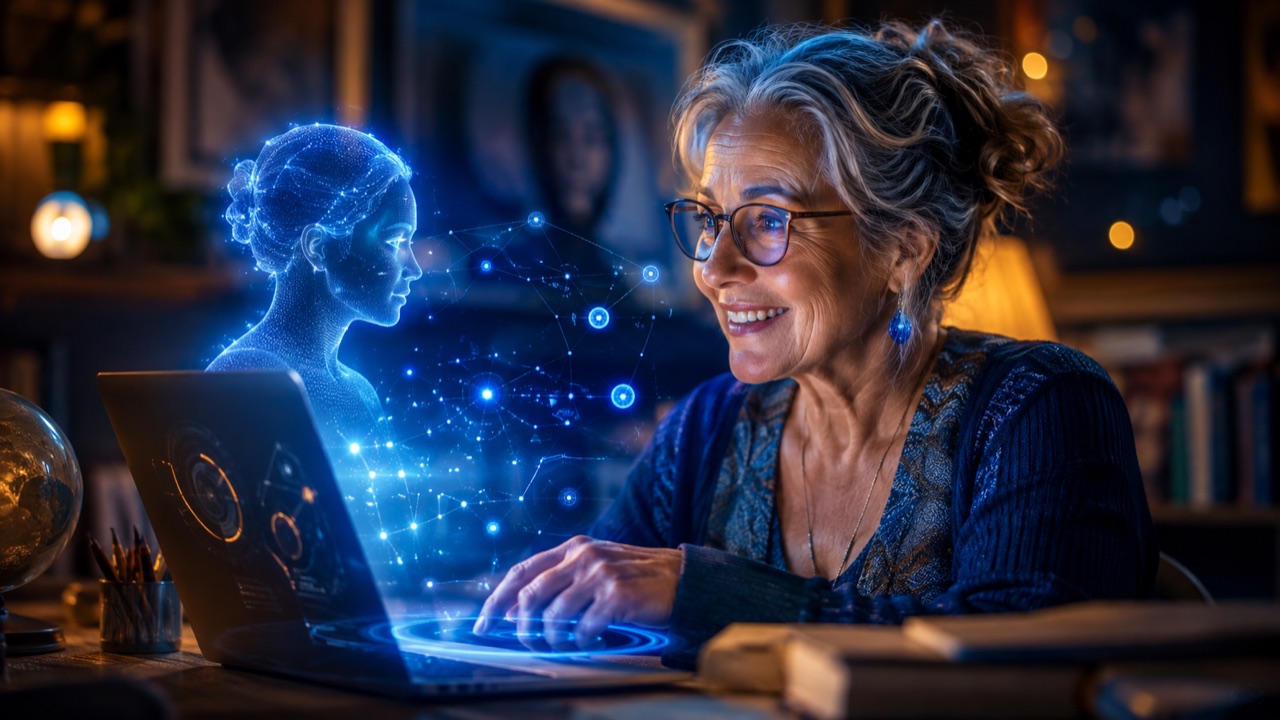
Generating images: from idea to picture in minutes
The most mature of the new features is the creation of images from a text description. It is enough to describe in words what you want to see: plot, style, light, angle - and the neural network produces a ready-made picture that can be refined and remade. These are illustrations for posts, covers, concepts, layouts, avatars, backgrounds for presentations. Quality directly depends on the description: the more specific the request, the closer the result is to what was intended. Having mastered this skill, one person closes a visual for a project without a designer or stock - quickly and for their task.
AI video: videos, animation and animation of frames
Video is the direction that rushed forward the last and most noticeable. Neural networks generate short videos based on descriptions, animate static images, complete scenes and change the background. This opens up short advertising and training videos, screensavers, animation for social networks - without a film crew and expensive editing. While such videos are short and require improvement, but for content where the idea and speed are important, they already save budgets. It’s worth starting with something simple: bringing one picture to life or putting together a five-second scene based on a clear description.
Voice synthesis and voice acting: what AI sounds like in 2026
Speech synthesis has reached a level where it is difficult to distinguish an artificial voice from a real one: with intonation, pauses, and emotion. Based on the text, the neural network will voice a video, podcast, audiobook or voice assistant in different languages and with different voices. This eliminates the need for a studio and voiceover for rough and routine tasks and speeds up content release. Here, too, the formulation of the task rules: indicate the pace, mood and style of speech so that the voice sounds appropriate. The combination of “text plus voiceover plus picture” already allows you to assemble the finished video alone.
Design and multimodality: when AI understands everything at once
The main shift for 2026 is multimodality: one model works with text, image, sound and data simultaneously. You can show the neural network a sketch and ask for a neat layout, give a photo and receive design options, combine text and pictures into a cohesive design. The boundaries between “write”, “draw” and “voice” are blurred - you describe the result, and the tool selects the means. For the average user, this means one thing: to create high-quality content, you no longer need to master ten programs; you just need to learn to clearly explain to AI what you need.
How to master the new capabilities of neural networks in practice
Theory here is useless without hands: opportunities are mastered only when you do something of your own. Take one real project - a post with a picture, a short video, a voiced presentation - and go all the way from description to result. Start with images as the simplest, then add voice and video. The common skill for all these tools is one: the ability to accurately and step by step formulate what you want to get. Having mastered it with clear examples, you will be able to apply any new model that comes out tomorrow - without fear and from day one.